COLORING ISN'T JUST FOR KIDS
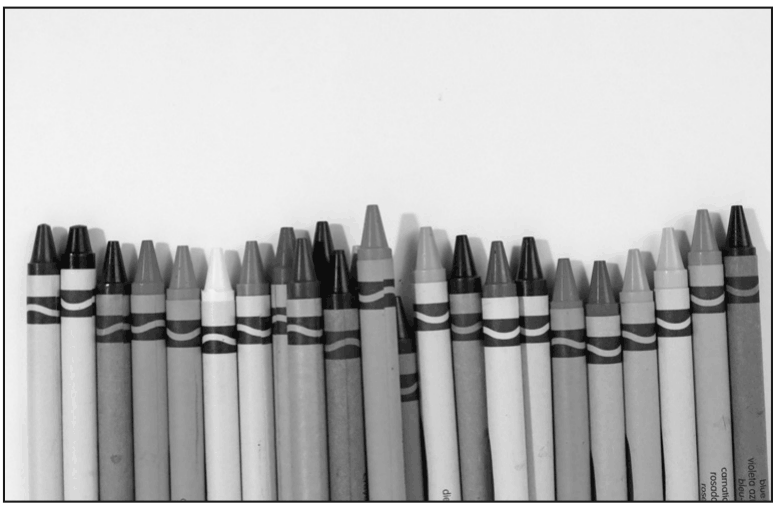
When we think of coloring with crayons*, we often think of our childhood. As we get older, we stop coloring. However, it seems that this might be a mistake. Some psychologists believe that coloring can be helpful to us as adults.(lines 1–3)
"We use different areas of the brain when we color," says psychologist Gloria Martinez. "When we choose colors, we use the areas that control logic and creativity. It's important for us to keep these areas active because we often have to use them in our everyday lives. Coloring helps us function better at home, at work or at school. It also improves our coordination as we have to make small, exact movements with our hands when we do it."(lines 4–11)
Martinez claims that coloring also helps us relax. "Coloring has a relaxing effect because when we focus on coloring a picture, we forget our worries. Although coloring an hour a day doesn't solve our problems, it takes us back to our childhood, a time when we probably had much less stress." She says that coloring especially benefits people who didn't color as children. "For these people, coloring exercises their brains more than it does for people who colored as children."(lines 12–18)
Martinez recommends that we use coloring to express our feelings. "People choose different colors or intensity of colors according to their mood," she says. For instance, we often use bright red to express anger and dark blue to express sadness. "I, myself," says Martinez, "often color to improve my mood. I work best when I am in a quiet environment, especially with relaxing music. Coloring comforts me, gives me peace, and lets me enjoy myself."(lines 19–23)
It seems that coloring is a worthwhile activity which is convenient, affordable and clearly enjoyable. It really isn't just for kids.(lines 24–25)