A CHALLENGE FOR HUMANOID ROBOTS*
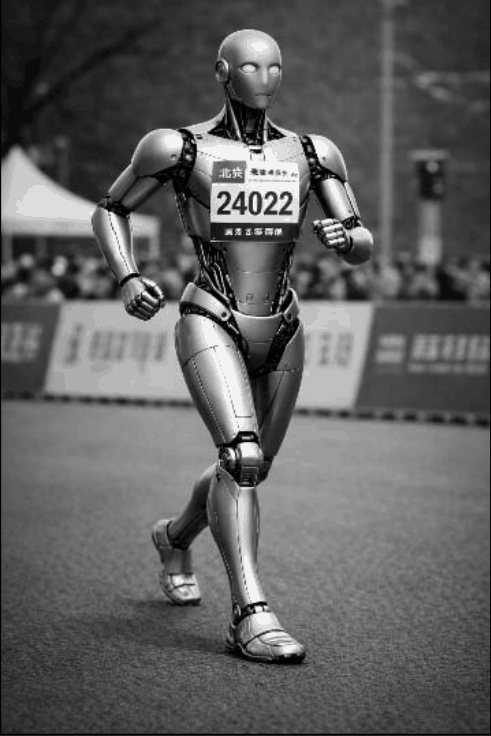
Last April, twelve thousand people ran in the annual half marathon* through the streets of Beijing, China. This race is especially difficult because it has many hills. The people had to spend many months preparing for this race. They did special exercises to make their legs stronger, and they ran long distances several times a week. However, 21 of the competitors in the race did not prepare at all. That is because they were robots!(lines 1–8)
These robots were a special type of robot called humanoid robots. "Many governments and companies are spending billions of dollars developing humanoid robots," says Lily Wang. Lily is an engineer at a company in China that makes robots. "Humanoid robots are very different from the ordinary robots that you see today," she explains. "Each ordinary robot can do only one specific task. For example, a robot in a restaurant can carry plates of food to customers, and a robot in a factory can paint car doors. But in the future, a single humanoid robot will be able to do both these things – and many more tasks as well."(lines 9–18)
It has not been easy to develop humanoid robots. The first challenge was to build a robot that can walk on two legs without falling. Engineers worked for more than 50 years and finally solved that problem. "Then, some of us even developed robots that can run," says Lily. "Now we are wondering how far they can run. So we arranged for them to join the Beijing race."(lines 19–22)
The half marathon in Beijing was not easy for the 21 robots that ran in it. They all fell at least once, and they all needed new batteries several times. In the end, only six robots finished the race, and they all ran more slowly than the human competitors. "We plan to have new robots in next year's race," says Lily. "They won't run faster, but they won't fall down. And most experts believe that in less than three years, robots might actually win half marathons."(lines 23–27)