HOW TO CONCENTRATE BETTER
Anna Robinson is studying computer science at Barrett University. She has a lot of homework to do, but much of the time she just sits at her desk without doing it. "I can't concentrate," Anna says. "Instead, I think about many other things. For example, I often think about what to cook for dinner."(lines 1–6)
Like Anna, many people cannot concentrate well. Last year, scientists found that most office workers have this problem. The scientists learned that these workers spend eight hours a day in the office but only work for three of those hours. The rest of the time, the office workers do other things. For example, many play games on their phones, send text messages to friends, or talk to other workers. Their bosses don't know how to solve this problem.(lines 7–14)
Samuel Beren, an American businessman, also had a problem concentrating but he found a surprising solution. He paid someone to sit behind him for seven hours every day. He asked that person to watch him all the time. Beren said that this helped him do a lot more work and earn a lot more money. But he had to pay the person who watched him $5,000 each month.(lines 15–18)
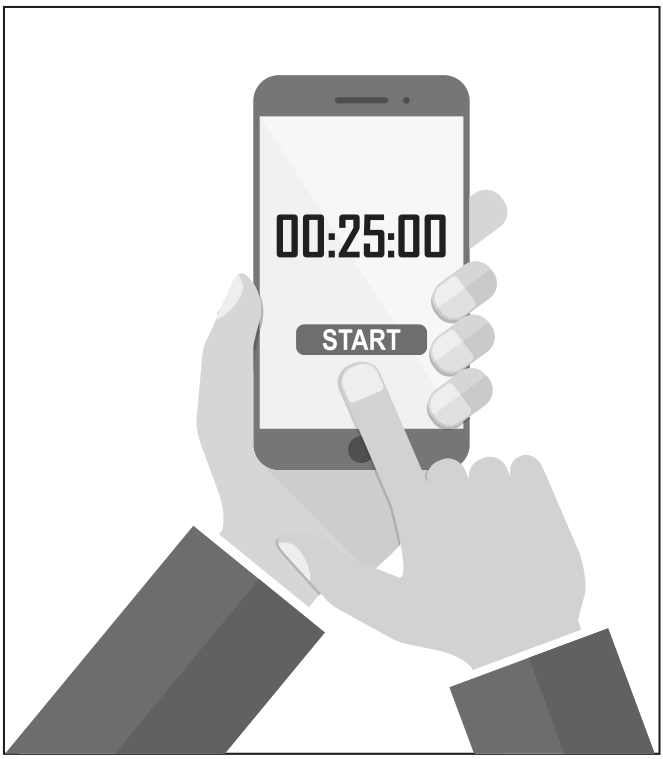
However, there are much cheaper and easier methods to help you concentrate than the method Beren used. One of these is the Pomodoro Method. An Italian student invented it 40 years ago. All you need is a timer*, like you have on your phone or on your watch. You turn on the timer for 25 minutes and work until it rings. Then you take a 5-minute break. During the break, you must not work. You can call a friend, make a snack, or go for a short walk. After 5 minutes, you turn on the timer for another 25 minutes. This is a wonderful way to make sure you do all your homework.(lines 19–24)