JILL'S TOYS
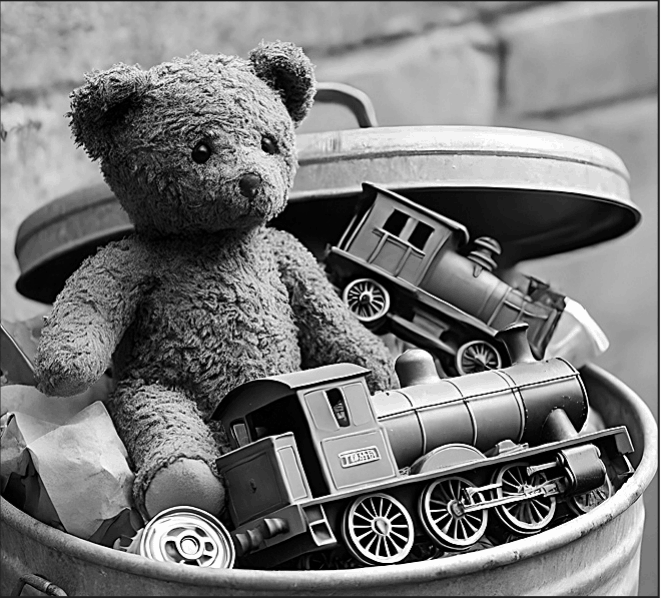
When you go into homes where there are young children, what is the first thing you see? Usually you see toys on the floor, in boxes and on shelves. Families with young children often spend a lot of money on toys. For example, in the USA they spend billions of dollars on toys each year. But children soon stop playing with most of their toys. Then their parents throw the toys in the garbage.(lines 1–8)
Three years ago, Jill Roberts of New York saw many toys in the garbage in her neighborhood. This made her very sad, but then she had an idea. She decided to find new homes for old toys. So she asked her friends to send her their old toys instead of throwing them away. Jill's friends sent her many toys, and she sold them on the internet.(lines 9–13)
More and more people heard about what Jill was doing and sent her their old toys. Jill received many toys, so she decided to open a company. She called her company Jill's Toys. Now, twenty people work for Jill's Toys. They clean all the toys and they fix the broken ones. "I sell most of the toys," says Jill. "But I also give some of them to families that don't have enough money to buy toys."(lines 14–18)
Sometimes, the workers at Jill's Toys are not able to fix the broken toys that they receive. However, the company does not throw these broken toys away. Instead, it sends them to TerraCycle, which is a company that recycles* plastic. Most toys have a lot of plastic in them. TerraCycle uses the plastic from the broken toys to make new products. For example, it makes large boxes and furniture for gardens.(lines 19–23)
"TerraCycle and my company are doing a great job," says Jill. "But people still throw millions of toys into the garbage. I think people buy too many toys. Children only need a few special toys. So it is a good idea to choose toys that they will want to play with for many years."(lines 24–26)