מבחן תנופה באנגלית לכיתה ט' (נוסח 2026) – עם פתרונות מלאים
25 שאלות90 דקותפתרון מלא לכל שאלה
מבחן באנגלית לכיתה ט' שבנוי בדיוק כמו מבחן התנופה (המיצ"ב) שנערך: אותם סוגי שאלות, אותם נושאים ואותה רמת קושי, בניסוח ובמספרים חדשים. פתרו לבד בזמן המבחן, ורק אחר כך פתחו את הפתרונות.
הוראות
Things to Buy
Lost Dog – Have You Seen Bruno?
Climbing Club for Teens
Daniel Cohen – Dog Walker
Golden Sands Beach – Rules for Swimmers
Ludwig van Beethoven – a great composer
The hidden price of cheap fashion
Too Many Toys?
שאלה 1
(3 נק')Vocabulary / single words- 1celebrate
- 2explain
- 3divide
- 4appear
◂ פתרון מלא לשאלה 1
התשובה הנכונה: b – explain (להסביר).
הדובר אומר "I don't understand this question" – הוא לא מבין שאלה, ולכן הוא מבקש שמישהו יסביר לו אותה: Can you explain it to me? = אתה יכול להסביר לי את זה?
למה לא a? celebrate = לחגוג. חוגגים יום הולדת או חג, לא שאלה שלא מבינים.
למה לא c? divide = לחלק (למשל עוגה לחלקים או מספר במספר). זה לא עוזר למי שלא מבין שאלה.
למה לא d? appear = להופיע. אי אפשר לומר "appear it" (הפועל הזה לא מקבל מושא), וגם המשמעות לא מתאימה.
3 נק': תשובה b (explain).
0 נק': כל תשובה אחרת.
שאלה 2
(3 נק')Vocabulary / single words- 1cloud
- 2bridge
- 3closet
- 4market
◂ פתרון מלא לשאלה 2
התשובה הנכונה: c – closet (ארון בגדים).
במשפט מדובר על מקום בחדר השינה שבו שומרים בגדים ונעליים – זה ארון: in a big closet = בארון גדול.
למה לא a? cloud = ענן. ענן נמצא בשמיים, לא בחדר.
למה לא b? bridge = גשר. גשר עובר מעל נהר או כביש, ולא שמים בו בגדים.
למה לא d? market = שוק. בשוק אפשר לקנות בגדים, אבל אין שוק בתוך חדר השינה.
3 נק': תשובה c (closet).
0 נק': כל תשובה אחרת.
שאלה 3
(3 נק')Vocabulary / single words- 1quietly
- 2finally
- 3nearly
- 4recently
◂ פתרון מלא לשאלה 3
התשובה הנכונה: a – quietly (בשקט).
התינוק ישן (The baby is sleeping), ולכן מבקשים לדבר בשקט כדי לא להעיר אותו: please talk quietly.
למה לא b? finally = סוף סוף / לבסוף. "תדברו סוף סוף" לא קשור לכך שהתינוק ישן.
למה לא c? nearly = כמעט. "תדברו כמעט" הוא משפט חסר משמעות.
למה לא d? recently = לאחרונה. מילה שמתארת זמן בעבר, ולא מתאימה לבקשה עכשיו.
3 נק': תשובה a (quietly).
0 נק': כל תשובה אחרת.
שאלה 4
(3 נק')Vocabulary / single words- 1honest
- 2lucky
- 3closed
- 4polite
◂ פתרון מלא לשאלה 4
התשובה הנכונה: c – closed (סגור).
בסוף המשפט כתוב "so we can't buy fresh bread today" – אי אפשר לקנות לחם. הסיבה: המאפייה סגורה בשבת.
למה לא a? honest = ישר, דובר אמת. זו תכונה של אדם, והיא לא מסבירה למה אי אפשר לקנות לחם.
למה לא b? lucky = בר מזל. גם זו לא סיבה לכך שאי אפשר לקנות.
למה לא d? polite = מנומס. מתאר התנהגות של אנשים, לא מצב של חנות.
3 נק': תשובה c (closed).
0 נק': כל תשובה אחרת.
שאלה 5
(3 נק')Vocabulary / lexical chunks- 1turn it down
- 2give it back
- 3fill it in
- 4put it on
◂ פתרון מלא לשאלה 5
התשובה הנכונה: d – put it on (ללבוש אותו).
קר בחוץ (It's very cold outside), ולכן נותנים לילד את המעיל ואומרים לו ללבוש אותו לפני שהוא יוצא. עם בגדים משתמשים בצירוף put on = ללבוש.
למה לא a? turn it down = להנמיך (קול של רדיו או טלוויזיה) או לסרב להצעה. לא עושים את זה למעיל.
למה לא b? give it back = להחזיר. לא הגיוני לתת למישהו מעיל ומיד לבקש שיחזיר אותו לפני שהוא יוצא לקור.
למה לא c? fill it in = למלא (טופס). מעיל לא ממלאים.
3 נק': תשובה d (put it on).
0 נק': כל תשובה אחרת.
שאלה 6
(3 נק')Vocabulary / single words- 1experiment
- 2election
- 3emergency
- 4advertisement
◂ פתרון מלא לשאלה 6
התשובה הנכונה: a – experiment (ניסוי).
התלמידים רצו לגלות (to find out) אם צמחים יכולים לגדול בלי אור. כדי לבדוק שאלה כזאת עושים ניסוי: did an experiment.
למה לא b? election = בחירות. בבחירות בוחרים נציג, לא בודקים צמחים.
למה לא c? emergency = מצב חירום. לא "עושים" מצב חירום כדי ללמוד משהו.
למה לא d? advertisement = פרסומת. פרסומת לא עוזרת לגלות אם צמחים גדלים בלי אור.
שימו לב: כל ארבע המילים מתחילות בתנועה, ולכן המילה an לפני הרווח לא עוזרת לבחור – צריך להבין את המשמעות.
3 נק': תשובה a (experiment).
0 נק': כל תשובה אחרת.
שאלה 7
(3 נק')Vocabulary / single words- 1solved
- 2received
- 3invited
- 4reached
◂ פתרון מלא לשאלה 7
התשובה הנכונה: b – received (קיבלתי).
המכתב הגיע מבת הדודה בקנדה (from my cousin in Canada). מכתב שמגיע ממישהו – מקבלים אותו: I received a letter from…
למה לא a? solved = פתרתי. פותרים בעיה או חידה, לא מכתב.
למה לא c? invited = הזמנתי. מזמינים אנשים (למסיבה), לא מכתב.
למה לא d? reached = הגעתי (למקום). אפשר "reached the station", אבל לא "reached a letter from someone".
3 נק': תשובה b (received).
0 נק': כל תשובה אחרת.
שאלה 8
(4 נק')Reading / literal comprehensionהשאלה מתייחסת ל"Things to Buy"
- 1Which shop to go to
- 2Which fruit Grandma likes
- 3How much money is in the box
- 4Why Noa has to come home early
◂ פתרון מלא לשאלה 8
התשובה הנכונה: d – Why Noa has to come home early (למה נועה צריכה לחזור הביתה מוקדם).
בסוף הפתק כתוב: "Please be home by 5:00 p.m. because Grandma is coming for dinner." – אמא מבקשת שנועה תחזור עד 5:00, ומסבירה למה: סבתא באה לארוחת ערב.
למה לא a? אמא כותבת "on your way home please buy" – בדרך הביתה, אבל לא כותבת איזו חנות. מי שבוחר כאן נתפס לכך שיש קנייה בחנות.
למה לא b? ברשימה יש תפוחים ירוקים, וסבתא מוזכרת בפתק – אבל לא כתוב מה סבתא אוהבת. אלה שני פרטים מהטקסט שחוברו בטעות.
למה לא c? כתוב איפה הכסף ("in the blue box by the TV"), אבל לא כמה כסף יש בקופסה.
4 נק': תשובה d (Why Noa has to come home early).
0 נק': כל תשובה אחרת.
שאלה 9
(4 נק')Reading / drawing inferencesהשאלה מתייחסת ל"Lost Dog – Have You Seen Bruno?"
- 1Why it is important to find Bruno soon
- 2Why Bruno ran away
- 3What Bruno likes to eat
- 4How big the prize is
◂ פתרון מלא לשאלה 9
התשובה הנכונה: a – Why it is important to find Bruno soon (למה חשוב למצוא את ברונו מהר).
בפסקה השנייה כתוב: "Bruno is only four months old and has never been outside alone. He can't find food by himself." – ברונו גור קטן שמעולם לא היה בחוץ לבד, והוא לא יכול למצוא אוכל בעצמו. מכאן מבינים שאם לא ימצאו אותו מהר הוא יהיה רעב ובסכנה. זו הסיבה שצריך למצוא אותו בהקדם.
למה לא b? כתוב שהוא ברח (ran away) ומתי, אבל לא כתוב למה ברח.
למה לא c? המודעה מזכירה אוכל ("He can't find food"), אבל לא אומרת איזה אוכל ברונו אוהב.
למה לא d? כתוב שיש פרס (There is a prize), אבל לא כתוב כמה גדול הוא או מה הוא.
4 נק': תשובה a (Why it is important to find Bruno soon).
0 נק': כל תשובה אחרת.
שאלה 10
(4 נק')Reading / literal comprehensionהשאלה מתייחסת ל"Climbing Club for Teens"
- 1Who teaches the classes
- 2The place where the classes meet
- 3The price of a lesson
- 4What students should wear
- 5How long each class lasts
◂ פתרון מלא לשאלה 10
התשובות הנכונות: b ו־c.
b – המקום שבו נפגשים: "Classes meet … at the Green Hill Sports Center." – השיעורים מתקיימים במרכז הספורט גרין היל.
c – המחיר של שיעור: "Each lesson costs only 30 shekels." – כל שיעור עולה 30 שקלים.
למה לא a? במודעה אין שם של מדריך או מורה – יש רק מספר טלפון וכתובת דוא"ל להרשמה.
למה לא d? לא כתוב מה ללבוש לשיעורים.
למה לא e? כתוב באיזה יום ובאיזו שעה השיעורים מתחילים (4:15 p.m.), אבל לא כמה זמן כל שיעור נמשך. זה פרט על זמן שקל להתבלבל בו.
4 נק': סימון b וגם c, ורק הן.
0 נק': כל תשובה אחרת, כולל סימון של אחת מהן בלבד או סימון של יותר משתי תשובות.
שאלה 11
(4 נק')Reading / critical thinkingהשאלה מתייחסת ל"Daniel Cohen – Dog Walker"
- 1people who want to buy a dog
- 2dog walkers who need more work
- 3children who are afraid of dogs
- 4dog owners who are often busy
◂ פתרון מלא לשאלה 11
התשובה הנכונה: d – dog owners who are often busy (בעלי כלבים שלעיתים קרובות עסוקים).
דניאל מציע שירות של הוצאת כלבים לטיול תמורת תשלום ("35 shekels for a one-hour walk"). הוא כותב לבעלי הכלב "your dog" ו"Your dog will love our walks!", ואפילו "If you are busy, I can take your dog to the vet". מי שישלם לו הם בעלי כלבים שאין להם זמן לטייל עם הכלב בעצמם – לכן הוא רוצה שהם יקראו את הדף.
למה לא a? דניאל לא מוכר כלבים. הוא מטייל עם כלבים שכבר יש לאנשים.
למה לא b? דניאל כותב "I have time to walk a few more dogs" – הוא מחפש עוד עבודה. מטיילי כלבים אחרים הם מתחרים שלו, לא לקוחות. זו מילה מהטקסט בהקשר הלא נכון.
למה לא c? הדף לא פונה לילדים, ובטח לא לילדים שמפחדים מכלבים.
4 נק': תשובה d (dog owners who are often busy).
0 נק': כל תשובה אחרת.
שאלה 12
(4 נק')Reading / critical thinkingהשאלה מתייחסת ל"Daniel Cohen – Dog Walker"
- 1"Daniel is friendly, but he often brings our dog back late."
- 2"Our dog Max runs to the door every time Daniel comes."
- 3"My dog liked Daniel, but he forgot to give her water."
- 4"Daniel says the walk is an hour, but it's only 20 minutes."
◂ פתרון מלא לשאלה 12
התשובה הנכונה: b – "Our dog Max runs to the door every time Daniel comes."
דניאל רוצה לשכנע בעלי כלבים לבחור בו, ולכן הוא ירצה להוסיף לדף רק תגובה חיובית לגמרי. בתגובה b הכלב מקס רץ לדלת בכל פעם שדניאל מגיע – כלומר הכלב אוהב אותו מאוד. זה מתאים גם למשפט בדף: "Your dog will love our walks!"
למה לא a? יש בה מחמאה (friendly), אבל אחרי ה־but מגיעה ביקורת: הוא מחזיר את הכלב באיחור. לקוח שקורא את זה עלול לוותר.
למה לא c? גם כאן אחרי ה־but יש ביקורת: הוא שכח לתת לכלבה מים – וזה סותר את מה שדניאל מבטיח ("I can give your dog food and water").
למה לא d? התגובה אומרת שדניאל לא עומד בהבטחה של טיול של שעה ("a one-hour walk"). זו תגובה שלילית.
4 נק': תשובה b ("Our dog Max runs to the door every time Daniel comes.").
0 נק': כל תשובה אחרת.
שאלה 13
(4 נק')Reading / critical thinkingהשאלה מתייחסת ל"Golden Sands Beach – Rules for Swimmers"
- 1Keep your music quiet so that other people can rest.
- 2The sea is warm today. Have a great swim!
- 3There are no shops near the beach.
- 4Children can swim alone in the deep water.
◂ פתרון מלא לשאלה 13
התשובה הנכונה: a – Keep your music quiet so that other people can rest.
כל הכללים בשלט הם הוראות התנהגות למתרחצים (מה מותר, מה אסור ולמה), ורובם שומרים על הבטיחות או על הנאה של כולם – למשל כלל 6: "Other visitors want to see them too". משפט a הוא הוראה ("Keep…") עם סיבה שקשורה לאנשים האחרים בחוף – בדיוק כמו שאר הכללים.
למה לא b? זה דיווח על מזג האוויר ואיחול, לא כלל. וחוץ מזה, שלט קבוע לא יכול לומר "today".
למה לא c? זו עובדה על החוף, לא הוראה למתרחצים.
למה לא d? זה סותר את כלל 5: "Children under 10 must stay with an adult all the time." – וגם מסוכן, ולכן לא ייתכן שזה כלל של החוף.
4 נק': תשובה a (Keep your music quiet so that other people can rest.).
0 נק': כל תשובה אחרת.
שאלה 14
(3 נק')Reading / literal comprehension- 1He wrote music only for the piano.
- 2He gave concerts for people who couldn't hear.
- 3His music is still played today.
- 4He wrote a new symphony every year.
◂ פתרון מלא לשאלה 14
התשובה הנכונה: c – His music is still played today (עדיין מנגנים את המוזיקה שלו היום).
בפסקה 1 כתוב: "orchestras everywhere still play them" – תזמורות בכל מקום עדיין מנגנות את היצירות שלו. המילה still מראה שזה קורה גם היום.
למה לא a? בפסקה כתוב שהוא כתב "nine symphonies" – יצירות לתזמורת שלמה, ולא רק לפסנתר.
למה לא b? בפסקה כתוב שהוא עצמו לא יכול היה לשמוע ("when he could not hear"), ולא שניגן בשביל אנשים שלא שומעים. מי שבוחר כאן מחבר את הנושא של חירשות לפרט הלא נכון.
למה לא d? כתוב שכתב תשע סימפוניות, אבל לא כתוב שכתב אחת בכל שנה.
3 נק': תשובה c (His music is still played today.).
0 נק': כל תשובה אחרת.
שאלה 15
(3 נק')Reading / literal comprehension◂ פתרון מלא לשאלה 15
So he could feel the vibrations of the piano (through the stick) in his head.
תשובה לדוגמה (ציון מלא): "He did it so he could feel the vibrations of the piano in his head."
איפה זה כתוב? בפסקה 2: "He held a thin stick between his teeth and touched the piano with the other end. As he played, he felt the vibrations through the stick in his head."
בטהובן לא שמע, ולכן הוא השתמש במקל: קצה אחד בין השיניים והקצה השני על הפסנתר. כשניגן, הרעידות (vibrations) של הפסנתר עברו דרך המקל אל הראש שלו, וכך הוא "הרגיש" את המוזיקה.
שימו לב: בפסקה מוזכרות גם רעידות שהרגיש באצבעות ("He could also feel some vibrations with his fingers"). זו לא הסיבה למקל – אצבעות על הקלידים לא צריכות מקל. לכן תשובה שמדברת על האצבעות לא מקבלת ניקוד.
3 נק': תשובה שמתייחסת להרגשת הרעידות של הפסנתר דרך המקל / בראש / בשיניים / בלסת.
דוגמאות: "to feel the vibrations in his head"; "because then he felt the vibrations through the stick"; "He can't hear, so the stick helps him feel the piano in his head".
1 נק': תשובה שמזכירה הרגשת רעידות באופן כללי, בלי להזכיר את המקל או את הראש. דוגמה: "to feel vibrations".
0 נק': כל תשובה אחרת. דוגמאות: "because he could feel vibrations with his fingers" (זו לא הסיבה למקל); "to hear the music better with his ears" (מידע שגוי); העתקה של כל פסקה 2 לפני התשובה (יותר מדי מידע לא רלוונטי).
שאלה 16
(12 נק')Reading / literal comprehensionהשאלה מתייחסת ל"Ludwig van Beethoven – a great composer"
◂ פתרון מלא לשאלה 16
סעיף a
his father
התשובה: his father (אבא שלו).
בפסקה 3 כתוב: "His father gave him his first music lessons."
שימו לב: בהמשך הפסקה מוזכרים גם "famous teachers" – אבל הם לימדו אותו בווינה, כשהיה בן 21, ולא היו המורים הראשונים שלו.
3 נק': תשובה שמזכירה את אביו. דוגמאות: "his father"; "father"; "His father gave him his first music lessons."
0 נק': כל תשובה אחרת. דוגמאות: "famous teachers"; "a singer".
סעיף b
They wrote (their words) in small notebooks.
התשובה: They wrote in small notebooks (הם כתבו במחברות קטנות).
בסוף פסקה 2 כתוב: "Friends who wanted to talk with him wrote in small notebooks."
בטהובן לא שמע, ולכן החברים כתבו את מה שרצו לומר והוא קרא.
3 נק': תשובה שמתייחסת לכתיבה (במחברות). דוגמאות: "they wrote in notebooks"; "by writing"; "in small notebooks".
0 נק': כל תשובה אחרת. דוגמאות: "with a stick" (המקל שימש אותו בנגינה); "they talked loudly".
סעיף c
seven (7)
התשובה: seven – בן 7.
בפסקה 3 כתוב: "at the age of seven he played the piano at his first public concert."
שימו לב לשאר המספרים בפסקה: 21 – הגיל שבו עבר לווינה; 28 – הגיל שבו התחילו בעיות השמיעה. הם לא עונים על השאלה.
3 נק': תשובה שמציינת את הגיל שבע. דוגמאות: "7"; "seven"; "He was seven years old."
0 נק': כל תשובה אחרת. דוגמאות: "21"; "1770" (שנה ולא גיל).
סעיף d
Vienna
התשובה: Vienna (וינה).
בפסקה 3 כתוב: "At 21, he moved to Vienna".
לא Bonn – בבון הוא נולד ("born in 1770 in Bonn"), ו־Germany היא מדינה ולא עיר.
3 נק': Vienna (גם עם שגיאת כתיב קלה, למשל Viena).
0 נק': כל תשובה אחרת. דוגמאות: "Bonn"; "Germany".
שאלה 17
(3 נק')Reading / integrating ideas◂ פתרון מלא לשאלה 17
3 – trouble hearing; 5 – Ninth Symphony; 1 – first concert; 2 – moves to Vienna; 4 – can hardly hear anything
הסדר הנכון (לפי הסדר שבו המשפטים מופיעים ברשימה): 3, 5, 1, 2, 4.
מסדרים לפי הגילים והשנים שבפסקה 3:
1. בגיל 7 – הקונצרט הראשון ("at the age of seven he played the piano at his first public concert").
2. בגיל 21 – עבר לווינה ("At 21, he moved to Vienna").
3. בערך בגיל 28 – התחיל להתקשות לשמוע ("When he was about 28, he started to have trouble hearing").
4. באמצע שנות הארבעים לחייו – כמעט לא שמע כלום ("By his mid-forties, he could hardly hear anything").
5. בשנת 1824 – הסימפוניה התשיעית נוגנה לראשונה ("In 1824, his Ninth Symphony was played for the first time").
בדיקה: בטהובן נולד ב־1770, ולכן ב־1824 הוא היה בן 53 או 54 – אחרי אמצע שנות הארבעים. לכן הסימפוניה התשיעית היא האירוע האחרון.
מלכודת: פסקה 1 מספרת שכתב מוזיקה כשלא שמע – אבל זה לא האירוע הראשון. בטקסט הסדר של הפסקאות שונה מסדר הזמן.
3 נק': כל המשפטים ממוספרים בסדר הנכון: 3, 5, 1, 2, 4 (לפי סדר הופעתם ברשימה).
0 נק': כל תשובה אחרת.
שאלה 18
(4 נק')Reading / critical thinkingהשאלה מתייחסת ל"Ludwig van Beethoven – a great composer"
◂ פתרון מלא לשאלה 18
Yes / No + two different reasons that support the opinion and refer to ALL students learning sign language.
זו שאלת דעה – אין תשובה אחת נכונה. צריך לבחור כן או לא, ולתת שני נימוקים שונים שתומכים בבחירה ומתייחסים לכך שכל התלמידים ילמדו שפת סימנים.
תשובה לדוגמה (ציון מלא) – Yes:
a. If all students learn sign language, they can talk with deaf classmates and make friends with them.
b. It is a useful skill. One day they may need it at work, for example as doctors or teachers.
תשובה לדוגמה (ציון מלא) – No:
a. Students already have many subjects, and there is not enough time for another one.
b. Most students will never use sign language, so it is better to let only the students who want it learn it.
שימו לב:
•שני הנימוקים צריכים להיות שונים זה מזה. "Some students don't want to learn it" ו"Only students who are interested should learn it" הם אותו רעיון – זה נימוק אחד בלבד.
•כל נימוק צריך להסביר למה כל התלמידים צריכים ללמוד. "Deaf students need sign language" מדבר רק על התלמידים החירשים עצמם, ולכן לא נחשב. לעומת זאת "If everyone learns it, deaf students can talk with all their classmates" מתייחס לכל התלמידים ומתקבל.
4 נק': שני נימוקים שונים שתומכים בעמדה שנבחרה ומתייחסים ללימוד שפת הסימנים על ידי כל התלמידים.
הערה: אם לא סומן כן/לא אבל העמדה ברורה מהנימוקים – לא מורידים נקודות.
2 נק': נימוק אחד בלבד שתומך בעמדה, כולל תשובה שבה a ו־b מביעים את אותו רעיון, או שאחד הנימוקים לא מתייחס לכל התלמידים.
0 נק': כל תשובה אחרת, כולל נימוקים שסותרים זה את זה או סותרים את הבחירה בכן/לא.
שאלה 19
(9 נק')Reading / main ideaהשאלה מתייחסת ל"The hidden price of cheap fashion"
- 1Reasons people enjoy shopping
- 2How clothing factories work
- 3How buying clothes has changed
- 4Why fashion is important to teenagers
- 1New styles for young people
- 2The success of chain stores
- 3Ways to wash clothes correctly
- 4Problems behind cheap clothes
- 1The end of chain stores
- 2Ideas for making things better
- 3Dangerous factories
- 4The newest fashion trends
◂ פתרון מלא לשאלה 19
סעיף a
התשובה הנכונה: c – How buying clothes has changed (איך קניית בגדים השתנתה).
פסקה 1 מתארת את העבר: לפני חמישים שנה בגדים חדשים היו "something special", קנו אותם פעם או פעמיים בשנה, תיקנו חורים והעבירו בגדים לילדים צעירים. בסוף הפסקה: "companies found ways to make clothes fast and cheaply, and shopping changed".
פסקה 2 מתארת את ההווה: רשתות חנויות בכל עיר, מחירים זולים, פריטים חדשים כל כמה שבועות. שתי הפסקאות יחד מראות את השינוי.
למה לא a? הפסקאות לא מסבירות למה אנשים נהנים לקנות – הן מתארות מה השתנה.
למה לא b? כתוב רק שהחברות מצאו דרך לייצר מהר ובזול, בלי הסבר איך עובד מפעל.
למה לא d? בני נוער מוזכרים רק כדוגמה ("prices that even teenagers could pay"). זו כותרת שנתפסת לפרט קטן.
3 נק': תשובה c (How buying clothes has changed).
0 נק': כל תשובה אחרת.
סעיף b
התשובה הנכונה: d – Problems behind cheap clothes (הבעיות שמאחורי בגדים זולים).
כל אחת מהפסקאות מתארת בעיה:
פסקה 3 – נזק לטבע: מים מלוכלכים עם כימיקלים זורמים לנהרות והורגים דגים.
פסקה 4 – הבגדים לא מחזיקים, נזרקים ונשרפים, והעשן מזהם את האוויר.
פסקה 5 – "a human price": העובדים עובדים 12 שעות ביום, במפעלים צפופים ומסוכנים, בשכר נמוך.
למה לא a? הפסקאות לא עוסקות בסגנונות לבוש.
למה לא b? ההצלחה של רשתות החנויות מתוארת בפסקה 2, לא בפסקאות 3–5.
למה לא c? המילה washes מופיעה בפסקה 4 ("After a few washes"), אבל הפסקה לא מלמדת איך לכבס. זו מילה מהטקסט בהקשר לא נכון.
3 נק': תשובה d (Problems behind cheap clothes).
0 נק': כל תשובה אחרת.
סעיף c
התשובה הנכונה: b – Ideas for making things better (רעיונות לשיפור המצב).
בפסקה 6 מתוארים פתרונות: חברות משתמשות בבד שצריך פחות מים ובצבעים בטוחים יותר ודואגות לשכר הוגן, וד"ר מאיה שטיין נותנת עצות לקונים ("ask yourself if you really need it", "swap it with a friend or give it away").
למה לא a? לא כתוב שרשתות החנויות נסגרות. כתוב שחלק מהחברות משתנות.
למה לא c? מפעלים מסוכנים הם הבעיה מפסקה 5. בפסקה 6 מדובר על בדיקה שהמפעלים בטוחים ("check that their factories are safe").
למה לא d? הפסקה לא עוסקת באופנה חדשה.
3 נק': תשובה b (Ideas for making things better).
0 נק': כל תשובה אחרת.
שאלה 20
(4 נק')Reading / integrating ideas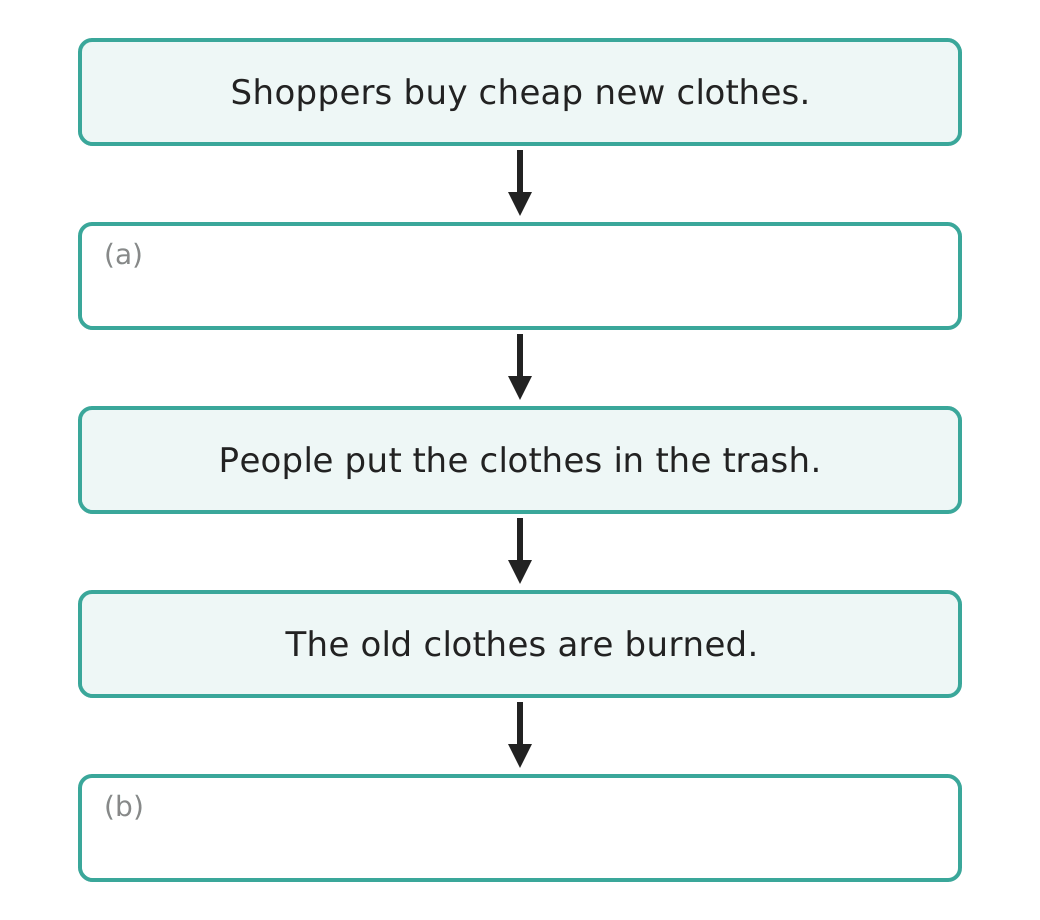
◂ פתרון מלא לשאלה 20
סעיף a
After a few washes, the clothes tear or lose their shape and color.
תשובה לדוגמה: "After a few washes, the clothes tear or lose their shape and color."
איפה זה כתוב? בפסקה 4: "Cheap clothes are also not made to last. After a few washes, many of them tear or lose their shape and color, so people put them in the trash."
המילה so (ולכן) מראה את הקשר: הבגדים נקרעים או מאבדים צורה וצבע ולכן זורקים אותם לפח. זה בדיוק השלב שבין הקנייה לבין הזריקה.
שימו לב: "People put them in the trash" כבר כתוב בתיבה הבאה – לא כותבים אותו שוב בתיבה (a).
2 נק': תשובה שמתייחסת לכך שהבגדים לא מחזיקים מעמד: הם נקרעים / מאבדים צורה או צבע / נהרסים אחרי כמה כביסות.
דוגמאות: "The clothes tear after a few washes."; "They lose their color."; "The clothes don't last long."; "Cheap clothes are not made to last."
0 נק': כל תשובה אחרת. דוגמאות: "People put them in the trash" (זה השלב הבא בתרשים); "They are burned" (שלב מאוחר יותר); "Making the cloth uses a lot of water" (לא מפסקה 4); העתקת כל הפסקה.
סעיף b
The smoke pollutes the air and makes it dangerous to breathe.
תשובה לדוגמה: "The smoke pollutes the air and makes it dangerous to breathe."
איפה זה כתוב? בסוף פסקה 4: "mountains of old clothes are burned, and the smoke pollutes the air and makes it dangerous to breathe."
כלומר, התוצאה של שריפת הבגדים היא עשן שמזהם את האוויר, ואז מסוכן לנשום אותו.
2 נק': כל אחד מהרעיונות: העשן מזהם את האוויר / האוויר נהיה מלוכלך / מסוכן לנשום את האוויר / שריפת הבגדים יוצרת עשן מזיק.
דוגמאות: "The smoke pollutes the air."; "The air becomes dirty."; "It is dangerous to breathe."
0 נק': כל תשובה אחרת. דוגמאות: "the air" (לא משפט ולא אומר מה קורה); "The fish die" (זה מפסקה 3, ממים מלוכלכים ולא משריפה).
שאלה 21
(3 נק')Reading / critical thinking◂ פתרון מלא לשאלה 21
Any two: shorter working days / fewer working days; less crowded factories with more light and fresh air; safe (repaired or new) buildings; higher pay.
בפסקה 5 מתוארות הבעיות של העובדים, ולכל בעיה אפשר להציע פתרון:
- "work twelve hours a day, six days a week" → לקצר את יום העבודה / לתת יותר ימי חופש. ("Let them work fewer hours every day.")
- "factories are often crowded and dark, with little fresh air" → פחות עובדים בכל חדר, יותר אור, חלונות או מאווררים. ("Open windows and put in more lights.")
- "some buildings are old and unsafe" → לתקן את הבניינים או לעבור לבניינים בטוחים. ("Fix the old buildings so they are safe.")
- "earn so little that they can hardly buy food" → לשלם להם יותר. ("Pay the workers more money.")
תשובה לדוגמה (ציון מלא):
a. The companies can pay the workers more money.
b. They can let the workers work fewer hours a day.
שימו לב: צריך להציע פעולה, ולא רק להעתיק את הבעיה. "They work twelve hours a day" מתאר בעיה ואינו הצעה.
3 נק': שני רעיונות שונים מאלה: קיצור שעות העבודה / פחות ימי עבודה בשבוע / הפסקות ומנוחה; מפעלים פחות צפופים / יותר אור / יותר אוויר צח; בניינים בטוחים (תיקון או מעבר); שכר גבוה יותר.
1 נק': רעיון אחד בלבד מהרשימה.
0 נק': כל תשובה אחרת. דוגמאות: "They earn very little" (בעיה בלי הצעה); "use safer colors" (לא קשור לתנאי העובדים); "buy fewer clothes" (עצה לקונים, לא לחברות).
שאלה 22
(3 נק')Reading / literal comprehension◂ פתרון מלא לשאלה 22
To buy only what they really need, and/or to swap clothes with a friend or give them away instead of throwing them out.
תשובה לדוגמה (ציון מלא): "She says we should buy only things we really need and give old clothes to other people instead of throwing them out."
איפה זה כתוב? בפסקה 6, בדברים של ד"ר שטיין: "Before you buy something, ask yourself if you really need it. When you are tired of a shirt, swap it with a friend or give it away instead of throwing it out."
יש כאן שתי עצות לקונים: (1) לקנות רק מה שבאמת צריך; (2) להחליף בגדים עם חבר או לתת אותם, ולא לזרוק. מספיק לכתוב אחת מהן.
שימו לב: "That way, clothes stay in use longer" הוא ההסבר למה העצה טובה, לא העצה עצמה. וגם "use cloth that needs less water" הוא מה שעושות החברות, לא עצה לקונים.
3 נק': תשובה שמתייחסת לקנייה רק של מה שבאמת צריך ו/או להחלפת בגדים עם חברים / מסירתם לאחרים במקום לזרוק.
דוגמאות: "Buy only what you need."; "Ask yourself if you really need it."; "Swap clothes with friends."; "Give your old clothes away."
0 נק': כל תשובה אחרת. דוגמאות: "Stop buying clothes" (לא זו העצה); "use safer colors" (מה שעושות החברות); "clothes stay in use longer" (הנימוק, לא העצה).
שאלה 23
(3 נק')Reading / critical thinkingהשאלה מתייחסת ל"The hidden price of cheap fashion"
- 1The low prices of clothes in chain stores
- 2The money companies spend on new styles
- 3The cost of fixing old clothes
- 4The harm cheap fashion causes to nature and people
◂ פתרון מלא לשאלה 23
התשובה הנכונה: d – The harm cheap fashion causes to nature and people (הנזק שאופנה זולה גורמת לטבע ולאנשים).
"The hidden price" הוא ביטוי בהשאלה: לא מדובר במחיר בכסף שרואים על התווית, אלא ב"מחיר" שמשלמים בדרך אחרת ושלא רואים כשקונים – הנזק. במאמר כתוב: "cheap clothes have a high price for nature" (פסקה 3) ו"There is a human price too" (פסקה 5). זה המחיר ה"נסתר".
למה לא a? המחירים הנמוכים בחנויות הם דווקא המחיר הגלוי – מה שהקונה רואה. הכותרת מדברת על מחיר שמתחת לפני השטח.
למה לא b? המאמר לא מדבר על כמה כסף החברות מוציאות על סגנונות חדשים.
למה לא c? תיקון בגדים מוזכר רק בפסקה 1 כמשהו שעשו בעבר. הכותרת לא מתייחסת לזה.
3 נק': תשובה d (The harm cheap fashion causes to nature and people).
0 נק': כל תשובה אחרת.
שאלה 24
(3 נק')Reading / critical thinkingהשאלה מתייחסת ל"The hidden price of cheap fashion" ול"Too Many Toys?"
◂ פתרון מלא לשאלה 24
For example: Both cheap clothes and cheap plastic toys don't last long / are thrown away quickly and are often burned, which pollutes the air.
תשובה לדוגמה (ציון מלא): "Both cheap clothes and cheap plastic toys break quickly, so people throw them away and burn them, and this pollutes the air."
צריך למצוא רעיון שמופיע בשני הטקסטים:
•לא מחזיקים מעמד: בגדים – "After a few washes, many of them tear" (פסקה 4); צעצועים – "break after just a few days of play".
•נזרקים: בגדים – "people put them in the trash"; צעצועים – "The broken toys go into the trash".
•נשרפים: בגדים – "mountains of old clothes are burned"; צעצועים – "many of them are burned".
•מזהמים את האוויר: בגדים – "the smoke pollutes the air"; צעצועים – "it releases harmful gases into the air".
•רוצים מהר משהו חדש: בגדים – "new items arrived every few weeks" (פסקה 2), "When you are tired of a shirt" (פסקה 6); צעצועים – "Children also get bored with them quickly and ask for new ones".
מספיק רעיון אחד, כל עוד הוא נכון גם לבגדים וגם לצעצועים.
שימו לב: "Both are made of plastic" – לא כתוב שהבגדים עשויים מפלסטיק. "Children ask for new toys" – מתייחס רק לצעצועים.
3 נק': תשובה שמתייחסת לאחד הרעיונות האלה, ונכונה לשני הטקסטים: לא מחזיקים זמן רב / נהרסים מהר; זורקים אותם לפח; שורפים אותם; השריפה מזהמת את האוויר / משחררת גזים מזיקים; מזיקים לסביבה; משתעממים מהם / מתעייפים מהם מהר ורוצים חדשים.
דוגמאות: "They both break quickly."; "People throw both of them in the trash."; "Both are burned and pollute the air."; "People get tired of them quickly and want new ones."
0 נק': כל תשובה אחרת. דוגמאות: "I like clothes and toys"; "Both are made of plastic" (לא נכון לבגדים); "Children get bored with toys" (רק על צעצועים); "The dirty water kills fish" (רק על בגדים).
שאלה 25
(5 נק')Writing / short composition◂ פתרון מלא לשאלה 25
A clear, relevant and cohesive paragraph of 40–50 words that names a time and explains the choice.
תשובה לדוגמה (5 נקודות, 45 מילים):
"I would choose to live in the year 2150. I think people will travel to other planets by then, and I would love to visit Mars. Doctors will probably cure many illnesses, so people will be healthier. Also, robots will do boring jobs like cleaning!"
למה זו תשובה מלאה?
•התוכן רלוונטי: יש בחירה ברורה (the year 2150) והסבר – שלוש סיבות (מסע לכוכבי לכת, רפואה טובה יותר, רובוטים).
•הטקסט מגובש: הרעיונות מחוברים במילות קישור (and, so, Also).
•אוצר מילים ודקדוק מתאימים, בלי שגיאות שמפריעות להבנה. אורך: בין 40 ל־50 מילים.
דוגמה לתשובה חלקית (3 נקודות, 47 מילים):
"I want live in the past, in time of kings, becaus I love castels. In castel there is many room and horses and I can to ride every day and eat big food. It will be very intresting and fun for me and my family live their."
למה 3 נקודות? התוכן רלוונטי ומבינים את הבחירה (לחיות בתקופת המלכים כי הוא אוהב טירות), ויש מספיק מילים. אבל יש הרבה שגיאות דקדוק וכתיב (want live, castels, there is many room, I can to ride, intresting, their במקום there) והרעיון "eat big food" לא ברור – השגיאות פוגעות בהבנה המלאה ובגיבוש. לכן הציון "בסיסי".
טיפים לכתיבה: לפתוח במשפט שעונה על השאלה ("I would choose to live in…"), לתת שתיים–שלוש סיבות עם because / so / also, ולספור מילים בסוף.
הערכה הוליסטית – הדגש על הבנה ולכידות. מתעלמים ממילים שאינן באנגלית. פחות מ־15 מילים – 0 נקודות.
5 נק' (טוב מאוד): התוכן קל להבנה, רלוונטי ומגובש; שגיאות דקדוק, כתיב, פיסוק או אותיות גדולות לא פוגעות בהבנה; לפחות 35 מילים.
– כתיבה טובה מאוד אבל רק 25–34 מילים: 3 נק'. כתיבה טובה מאוד אבל רק 16–24 מילים: 1 נק'.
3 נק' (בסיסי): התוכן לא מובן לגמרי – רלוונטי אבל חסרה לכידות; השגיאות מונעות הבנה מלאה; לפחות 35 מילים.
– תוכן בסיסי אבל רק 16–34 מילים: 1 נק'.
1 נק' (חלש): רוב התוכן לא מובן או לא רלוונטי; הרבה שגיאות שמקשות מאוד על ההבנה; לפחות 15 מילים.
0 נק': התוכן לא רלוונטי למשימה, או שכל התשובה לא מובנת, או שהועתקו ההוראות בלבד, או שנכתבו פחות מ־15 מילים.
◂ טבלת תשובות
| שאלה | תשובה |
|---|---|
| 1 | תשובה 2 |
| 2 | תשובה 3 |
| 3 | תשובה 1 |
| 4 | תשובה 3 |
| 5 | תשובה 4 |
| 6 | תשובה 1 |
| 7 | תשובה 2 |
| 8 | תשובה 4 |
| 9 | תשובה 1 |
| 10 | תשובות 2, 3 |
| 11 | תשובה 4 |
| 12 | תשובה 2 |
| 13 | תשובה 1 |
| 14 | תשובה 3 |
| 15 | So he could feel the vibrations of the piano (through the stick) in his head. |
| 16 | a: his father b: They wrote (their words) in small notebooks. c: seven (7) d: Vienna |
| 17 | 3 – trouble hearing; 5 – Ninth Symphony; 1 – first concert; 2 – moves to Vienna; 4 – can hardly hear anything |
| 18 | Yes / No + two different reasons that support the opinion and refer to ALL students learning sign language. |
| 19 | a: תשובה 3 b: תשובה 4 c: תשובה 2 |
| 20 | a: After a few washes, the clothes tear or lose their shape and color. b: The smoke pollutes the air and makes it dangerous to breathe. |
| 21 | Any two: shorter working days / fewer working days; less crowded factories with more light and fresh air; safe (repaired or new) buildings; higher pay. |
| 22 | To buy only what they really need, and/or to swap clothes with a friend or give them away instead of throwing them out. |
| 23 | תשובה 4 |
| 24 | For example: Both cheap clothes and cheap plastic toys don't last long / are thrown away quickly and are often burned, which pollutes the air. |
| 25 | A clear, relevant and cohesive paragraph of 40–50 words that names a time and explains the choice. |